
DAAKYI Cloud
Sovereign Cloud, Operated by the Team That Secures It.
Workloads stay in jurisdiction, controls are owned by DAAKYI, and clients have one accountable partner.
Executive Summary
- 01Sovereign cloud means data, keys, administration and recovery all stay under controls you can name and audit within one jurisdiction.
- 02Isolation, encryption and segmentation limit the damage when one workload or credential is compromised.
- 03Resilience counts only when restores, failover and key recovery have been tested against agreed recovery objectives.
In Depth
How DAAKYI Cloud Works
Residency Is an Architecture Decision
Sovereign cloud starts with where data lives and who can reach it. Residency means primary storage, replicas, backups, logs and snapshots all remain inside a named jurisdiction. Sovereignty goes further. It asks who holds the encryption keys, which legal regimes can compel access, and which administrators can touch the control plane. A workload can sit in-country and still depend on a foreign management service or a key held abroad. Designing for sovereignty means mapping every data flow, including telemetry and support access, and removing paths that cross the boundary without a documented, approved reason.
Isolation Keeps Tenants and Workloads Apart
Multi-tenant infrastructure only works if tenants cannot see each other. Isolation is enforced in layers. The hypervisor separates compute. Virtual networks and microsegmentation separate traffic, so a compromised web server cannot reach a database it has no business touching. Storage is separated by tenant-scoped encryption and access policy. Management interfaces sit on their own network with strong authentication. Segmentation is also a detection aid: when east-west traffic is restricted to known paths, any unexpected connection stands out. Isolation should be tested, not assumed, through configuration review and attempted lateral movement from a low-trust segment into a high-trust one.
Resilience Is Designed and Rehearsed
Recovery capability is proven only by recovering. Backups must be immutable or logically isolated so ransomware cannot encrypt them along with production. Each workload needs a recovery point objective and a recovery time objective agreed with its business owner. Replication within the jurisdiction protects against site failure, but replication also copies corruption and malicious changes, so it does not replace point-in-time backup. Runbooks should define failover order, dependencies such as identity and DNS, and decision authority. Regular restore tests, including full application recovery, expose gaps in sequencing before an incident does.

Sovereignty is not where the servers sit. It is who holds the keys, who runs the controls, and who answers.
Value Proposition
Workloads stay in jurisdiction, controls are owned by DAAKYI, and clients have one accountable partner.
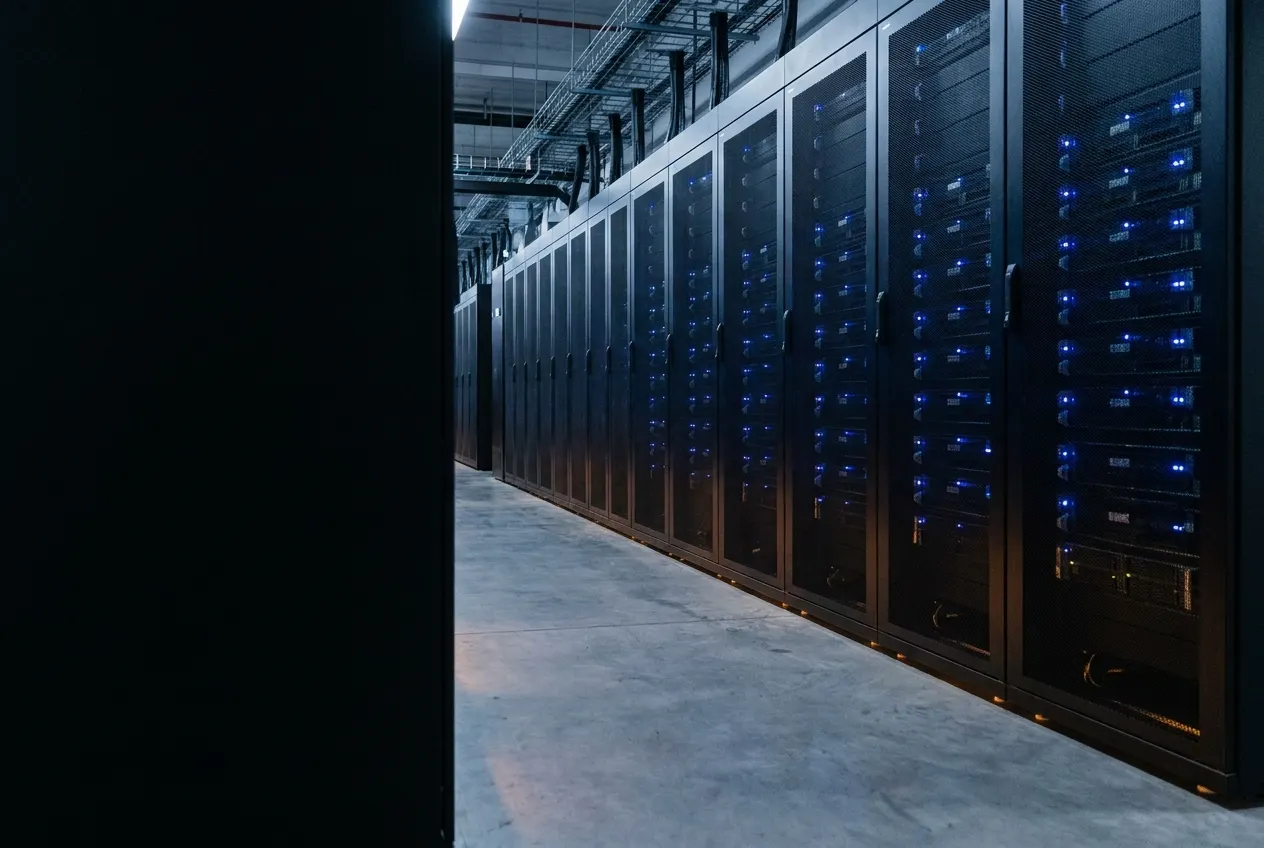
Built with Sangfor · Data center capacity with Digital Realty
Feature 1 of 8
Secure Cloud Infrastructure
Hardened compute, storage, network
What DAAKYI Cloud Supports
Seven Workload Areas
- Sovereign and data-resident infrastructure
- Enterprise workloads
- Secure compute and storage
- Cloud networking
- Backup and disaster recovery
- Managed cloud security
- Regulated and critical infrastructure workloads
Regional Reach
Serving Clients Across DAAKYI's Markets
DAAKYI Cloud serves public and private sector clients across the markets where DAAKYI operates, with support delivered by DAAKYI's own teams.
Each deployment is designed around the data-residency and sovereignty rules of the client's jurisdiction, so workloads and data stay where the law requires them to be.
On daakyicloud.com
Explore DAAKYI Cloud
Use Cases
Where Organizations Put It to Work
01
Regulated Data That Must Stay in Country
Host systems holding citizen, patient or financial records where law or policy requires the data to remain in jurisdiction.
02
Critical Workloads for CII Operators
Run services designated as critical information infrastructure on isolated, monitored infrastructure with one accountable operator.
03
Recovery and Continuity Environments
Keep a ready recovery environment for core systems, so restoration does not depend on infrastructure an incident has already touched.
Product Journey
Discover, Engage, Onboard, Operate
- 1
Discover
Map which workloads, data classes and obligations call for sovereign hosting.
- 2
Engage
Agree the architecture, isolation model, residency controls and support areas.
- 3
Onboard
Migrate workloads in planned waves, with security baselines applied from day one.
- 4
Operate
DAAKYI runs, patches and monitors the platform while you keep visibility of controls and evidence.
Methodology
The Method, Step by Step
- 1
Classify Data and Workloads
Inventory workloads and rate the data each one holds. Record applicable obligations, such as data protection law, sector directives and critical information infrastructure designation. The classification decides which workloads must stay in jurisdiction, which need dedicated isolation, and which can use shared services. Without it, placement decisions become guesswork.
- 2
Design the Landing Zone
Define accounts or tenants, network zones, identity boundaries, encryption and key custody before any workload moves. Set guardrails as code so that non-compliant configurations are blocked at deployment. A well-designed landing zone makes the secure path the easy path for engineering teams.
- 3
Migrate and Harden
Move workloads in waves, starting with lower-risk systems. Apply hardened baselines to images, operating systems and network rules, then scan for drift. Rotate credentials and retire legacy access during cutover. Validate that logs, backups and monitoring work before declaring the workload live.
- 4
Monitor and Govern
Stream cloud audit logs, network flows and identity events into security monitoring. Map detections to ATT&CK techniques relevant to cloud. Review access entitlements on a schedule and track policy exceptions to closure. Governance evidence should be a by-product of operations, not a quarterly scramble.
- 5
Test and Recover
Run restore tests, failover exercises and tabletop scenarios against agreed recovery objectives. Record what failed, assign owners and retest. Feed lessons into runbooks, detection rules and architecture. Include identity, DNS and key management in every exercise, since these dependencies often block recovery.
Threat Scenarios
What It Looks Like in Practice
Ransomware Reaches Backups
How It Shows Up
Backup deletion commands, unusual snapshot changes, or backup jobs failing shortly after privileged logins from unfamiliar locations.
Response
Immutable, isolated backup copies and separate backup credentials preserve a clean recovery point. Restore into a quarantined segment and verify integrity before reconnecting.
Stolen Cloud Administrator Credentials
How It Shows Up
Logins outside normal patterns, new access keys, disabled logging, or role assignments created without a change record.
Response
Enforce phishing-resistant multifactor authentication and just-in-time privilege. Revoke sessions, rotate keys and review audit logs for persistence.
Cross‑Border Data Leakage
How It Shows Up
Replication jobs, support tools or analytics services sending data or logs to endpoints outside the approved jurisdiction.
Response
Apply policy guardrails that block non-resident regions and services. Review egress flows against the data map and remediate the dependency.
Misconfigured Storage Exposure
How It Shows Up
A storage bucket or database endpoint becomes reachable from the public internet, often found by external scanning.
Response
Continuous configuration scanning flags public exposure and policy-as-code prevents it at deployment. Assess what was accessed using access logs, then close and document the gap.
| Scenario | How It Shows Up | Response |
|---|---|---|
| Ransomware Reaches Backups | Backup deletion commands, unusual snapshot changes, or backup jobs failing shortly after privileged logins from unfamiliar locations. | Immutable, isolated backup copies and separate backup credentials preserve a clean recovery point. Restore into a quarantined segment and verify integrity before reconnecting. |
| Stolen Cloud Administrator Credentials | Logins outside normal patterns, new access keys, disabled logging, or role assignments created without a change record. | Enforce phishing-resistant multifactor authentication and just-in-time privilege. Revoke sessions, rotate keys and review audit logs for persistence. |
| Cross‑Border Data Leakage | Replication jobs, support tools or analytics services sending data or logs to endpoints outside the approved jurisdiction. | Apply policy guardrails that block non-resident regions and services. Review egress flows against the data map and remediate the dependency. |
| Misconfigured Storage Exposure | A storage bucket or database endpoint becomes reachable from the public internet, often found by external scanning. | Continuous configuration scanning flags public exposure and policy-as-code prevents it at deployment. Assess what was accessed using access logs, then close and document the gap. |
Deliverables and Roles
What You Receive, and Who Does What
| Deliverable | Purpose |
|---|---|
| Data and Workload Classification Register | Links each workload to its data sensitivity, legal obligations and required placement. |
| Sovereign Landing Zone Design | Documents tenant structure, network zones, identity model and guardrails before workloads arrive. |
| Key Custody and Encryption Standard | States who generates, stores, rotates and can revoke each class of key. |
| Recovery Objectives and Runbooks | Defines recovery point and time targets per workload with step-by-step restoration procedures. |
| Cloud Control and Audit Evidence Pack | Gives auditors and regulators current proof of access reviews, configuration state and test results. |
| Role | Responsibility |
|---|---|
| Data Owner (Client) | Classifies the data, accepts residual risk and approves any exception to residency rules. |
| Cloud Security Architect (Provider) | Designs isolation, encryption and network controls that match the classification. |
| Platform Operations Engineer (Provider) | Patches, monitors and maintains the infrastructure within agreed change controls. |
| Compliance or Risk Officer (Client) | Maps cloud controls to regulatory duties and reviews evidence on a set cycle. |
Maturity Model
Where Organizations Typically Stand
Stage 1
Ad Hoc
Workloads are placed by convenience. Data location, key custody and backup scope are undocumented.
Stage 2
Defined
Classification exists and approved regions are named. Baselines and access policies are written but unevenly enforced.
Stage 3
Managed
Guardrails are automated, logs feed monitoring, and restore tests run on schedule with recorded results.
Stage 4
Optimized
Evidence is continuous, exceptions are rare and tracked, and exercises routinely improve detection and recovery design.
Frameworks and Regulation
The Standards That Shape This Work
ISO/IEC 27001:2022 and 27002:2022
Annex A lists 93 controls across organizational, people, physical and technological themes. Cloud controls such as access, cryptography, logging and backup map directly into it, with ISO/IEC 27002 supplying guidance.
NIST CSF 2.0
Its six functions (Govern, Identify, Protect, Detect, Respond, Recover) give a structure for cloud governance, protection, monitoring and recovery. The Govern function suits decisions about residency and key custody.
Ghana Data Protection Act, 2012 (Act 843)
It requires data controllers to register and sets eight privacy principles, including data security safeguards. Hosting choices must support those safeguards and the accountability principle.
Ghana Cybersecurity Act, 2020 (Act 1038)
It provides for designating and protecting Critical Information Infrastructure and for incident reporting. Hosts of critical workloads should design logging and reporting with these duties in mind.
Buyer Guidance
Choosing the Right Provider
What to look for
- Look for clear statements of where primary data, replicas, backups, logs and support access reside.
- Look for key custody that you can verify and revoke, with separation between key administrators and data administrators.
- Look for tenant isolation that has been independently tested rather than described only in marketing language.
- Look for restore evidence from real tests, not only backup job success reports.
Questions to ask a provider
- Which legal regimes could compel access to our data or keys, and how is that exposure limited?
- Which staff can reach the management plane, from where, and how is that access logged and reviewed?
- How are backups protected from the same credentials that administer production?
- What evidence can you give us to support an audit or regulator inquiry?
Technical Detail
For Architects and Engineers
Key Custody and Envelope Encryption
Sovereign designs rely on envelope encryption. A data encryption key protects each object or volume, and a key encryption key held in a key management system wraps it. Where the key management system sits, and who administers it, determines practical sovereignty. Hardware security modules inside the jurisdiction can anchor the root of trust. Customer-held or externally held keys let an organization revoke access by withholding the key, at the cost of availability if that key service fails. Key policy should separate duties, so no single administrator can both manage keys and read data. Rotation, escrow, and audited use of every decrypt call complete the control set.
Segmentation and Zero Trust in Cloud Networks
Zero trust, as described in NIST SP 800-207, removes implicit trust based on network location. In cloud, that translates into identity-aware access to every service. Segment networks into zones for ingress, application, data and management. Apply default-deny rules between zones, with explicit allow lists per application. Use private endpoints so platform services are never exposed to the public internet. Terminate administrative access through a hardened bastion or privileged access broker with session recording and just-in-time elevation. Log flow data and compare it against intended paths. Unexpected flows between zones often reveal misconfiguration or early lateral movement before any malware executes.
Glossary
Key Terms
- Data Residency
- The requirement that data is stored and processed within a defined country or region.
- Landing Zone
- A pre-built, governed cloud environment with identity, network, logging and policy guardrails already in place.
- Key Custody
- Control over the generation, storage, use and revocation of encryption keys.
- Recovery Point Objective
- The maximum acceptable amount of data loss, measured as time between the last good copy and the incident.
FAQ
Questions About DAAKYI Cloud

DAAKYI Intelligence
Ask Kasara About DAAKYI Cloud
Kasara, our AI assistant, answers from DAAKYI's published content and can connect you with a specialist.

Next Step