
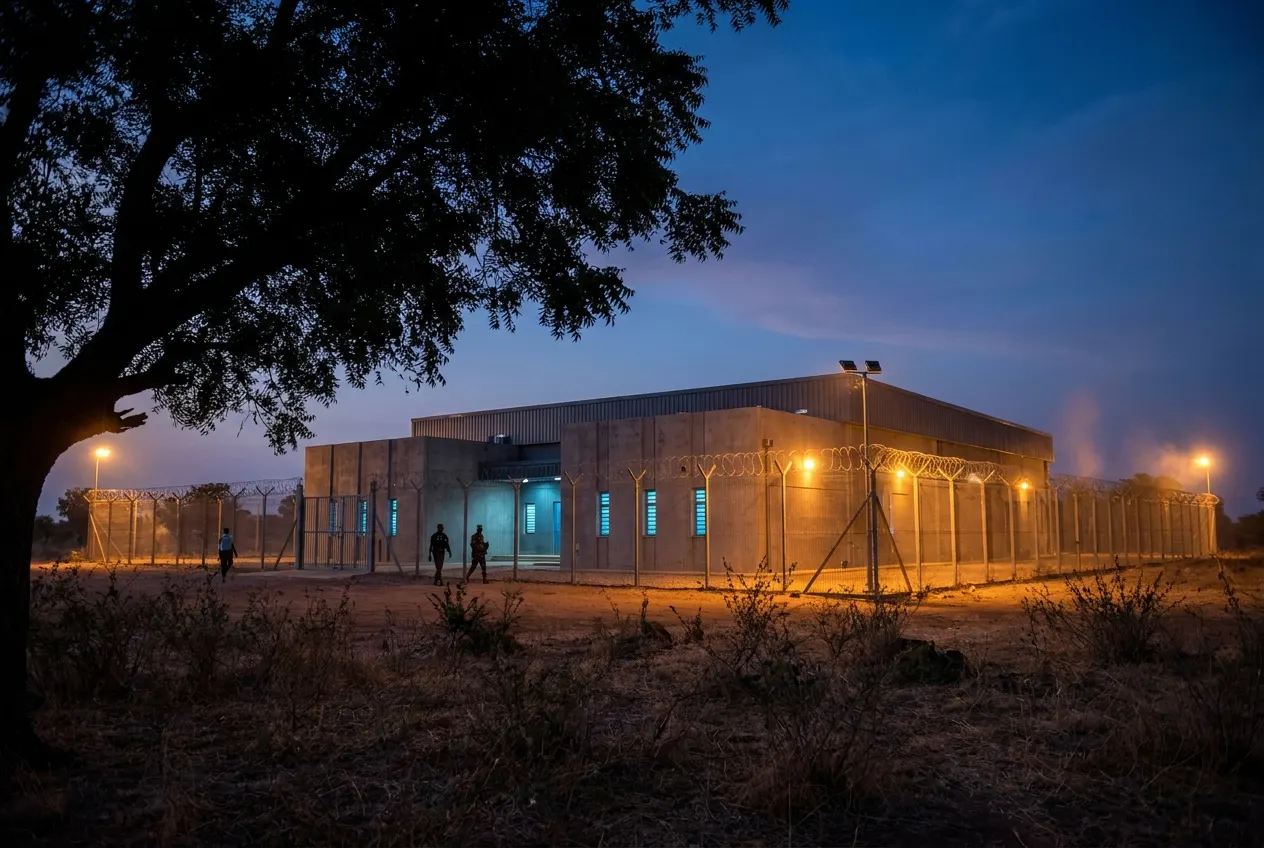
Solution · Sovereign Cloud & Secure Infrastructure
Keep Critical Workloads in Jurisdiction, Under Accountable Control.
The Challenge
Data residency mandates, concentration risk and supply-chain exposure make some workloads unsuitable for offshore hyperscale hosting.
The Outcome
- Workloads in jurisdiction
- One accountable partner for cloud and security
- Resilient digital foundations
Executive Summary
- 01Sovereignty covers where data sits, who holds the keys, and who can administer the platform.
- 02Residency evidence depends on mapped data flows, including backups, logs and support access.
- 03Recovery design must keep regulated workloads in jurisdiction during an outage, not only in normal operation.
The Challenge
Data residency mandates, concentration risk and supply‑chain exposure make some workloads unsuitable for offshore hyperscale hosting.
Institutions still need modern compute, storage and recovery to deliver digital services.
The DAAKYI Approach
DAAKYI hosts regulated and critical workloads on DAAKYI Cloud, secures hybrid estates and integrates monitoring with the 24/7 SOC.
Migration is planned workload by workload against residency and resilience requirements.
Delivered Through These DAAKYI Services
- 01
Workload residency and criticality review
- 02
Landing on DAAKYI Cloud or secured hybrid
- 03
Integrated monitoring and managed security
- 04
Backup and recovery design
In Depth
How the Solution Comes Together
Residency Is More than a Region Setting
Data residency is often treated as a checkbox on a cloud console. In practice it covers where primary data sits, where backups replicate, where logs and telemetry travel, and where support staff can reach the environment from. A workload can run in country while its encryption keys, snapshots or administrative plane sit elsewhere. Sovereign design traces every one of these paths. It documents which laws apply to which data class, then constrains storage, replication and administrative access to match. The result is a defensible statement of where regulated data lives and who can touch it, one that regulators and auditors can verify.
Control Means Keys, Access and Operations
Sovereignty depends on who holds control, not only where hardware sits. Several questions matter: who administers the platform, who holds the encryption keys, and who can compel access to either. Customer-controlled keys, role-based administration with strong authentication, and tamper-evident logging keep those answers clear. Segmentation separates tenants and workloads so one compromised environment cannot reach another. Patching, configuration baselines and vulnerability management then run as continuous operations. A sovereign platform that drifts out of hardening loses the assurance it was built to provide.
Resilience Is Part of Sovereignty
Concentration risk applies to infrastructure as much as to vendors. If primary and recovery environments share one provider, region or control plane, a single failure can take both down. Sound design sets recovery objectives per workload, places backups out of reach of production credentials, and tests restoration instead of assuming it. Immutable backup copies protect against ransomware that targets backup catalogs. Recovery runbooks name who decides to fail over, and how residency requirements are kept during an emergency, when pressure to relax them is highest.

A workload is sovereign only when its data, keys, administrators and recovery copies all stay inside accountable boundaries.
Capability Matrix
What the Service Includes
In‑Jurisdiction Hosting
Data kept in-jurisdiction by design.
Workload Isolation
Segmented tenants and workloads.
Managed Cloud Security
Operated and patched by DAAKYI.
Integrated SOC Monitoring
Cloud telemetry in the 24/7 SOC.
Operating Model
Delivered from the GUIDE · SECURE · OPERATE Pillar
Pillar position
GUIDE · SECURE · OPERATE
Delivered across all three pillars
Engagement model
Managed Security Services
SOC, MXDR and managed cloud security under SLAs.
Best for · 24/7 coverage without building in-house
Engagement model
Project Implementation
Design and deployment of security technologies.
Best for · Modernization and transformation
Engagement model
Long‑Term Operations
Multi-year operations and continuous improvement.
Best for · Critical systems needing sustained assurance
Threat Scenarios
What It Looks Like in Practice
Silent Offshore Replication
How It Shows Up
An audit finds backups or logs replicated to a foreign region that never appeared in the data inventory.
Response
Map every data flow, restrict replication to approved locations, and enforce those limits with policy guardrails that block noncompliant configurations.
Cloud Misconfiguration Exposure
How It Shows Up
A scan finds a public storage container or an over-permissive role attached to a production workload.
Response
Run continuous posture checks, review privileges against least access, and remediate drift through controlled change rather than manual fixes.
Ransomware Reaching Backups
How It Shows Up
Attackers use stolen administrator credentials to delete or encrypt backup catalogs before triggering encryption in production.
Response
Keep immutable copies under separate credentials, and rehearse restoration so recovery does not depend on the compromised identity plane.
Compromised Software Supply Chain
How It Shows Up
A vendor update or machine image introduces unexpected outbound connections from a regulated workload.
Response
Restrict egress by default, verify image and package provenance, and monitor workload telemetry for behavior that departs from baseline.
| Scenario | How It Shows Up | Response |
|---|---|---|
| Silent Offshore Replication | An audit finds backups or logs replicated to a foreign region that never appeared in the data inventory. | Map every data flow, restrict replication to approved locations, and enforce those limits with policy guardrails that block noncompliant configurations. |
| Cloud Misconfiguration Exposure | A scan finds a public storage container or an over-permissive role attached to a production workload. | Run continuous posture checks, review privileges against least access, and remediate drift through controlled change rather than manual fixes. |
| Ransomware Reaching Backups | Attackers use stolen administrator credentials to delete or encrypt backup catalogs before triggering encryption in production. | Keep immutable copies under separate credentials, and rehearse restoration so recovery does not depend on the compromised identity plane. |
| Compromised Software Supply Chain | A vendor update or machine image introduces unexpected outbound connections from a regulated workload. | Restrict egress by default, verify image and package provenance, and monitor workload telemetry for behavior that departs from baseline. |
Outcomes
What Your Institution Gains
- Workloads in jurisdiction
- One accountable partner for cloud and security
- Resilient digital foundations
Methodology
The Method, Step by Step
- 1
Classify Workloads
Inventory applications and data stores, then rate each for regulatory exposure, business criticality and tolerance for downtime. This produces the evidence for which workloads must stay in jurisdiction, which can run on secured hybrid infrastructure, and which carry no residency constraint.
- 2
Map Data Flows
Trace how data moves between users, applications, backups, analytics and third parties. Include logs, telemetry, support access and key management paths. Hidden flows are the most common reason a residency claim fails under audit.
- 3
Design Landing Zone
Define the account or tenant structure, network segmentation, identity model, key custody and guardrails before any workload arrives. Baselines are written as code so every new environment starts compliant and deviations are detectable rather than discovered later.
- 4
Harden and Monitor
Apply configuration baselines, vulnerability management and privileged access controls, then feed cloud and infrastructure telemetry into security monitoring. Detection content should reflect cloud-specific adversary behavior, such as credential abuse, control-plane changes and unusual data movement.
- 5
Test Recovery
Exercise backup restoration and failover against stated objectives, including loss of the identity provider and loss of a site. Record results, fix gaps, and repeat after major change so recovery claims rest on observed behavior.
How It Works
How Sovereign Cloud & Secure Infrastructure Comes Together
- 01Assess
- 02Land
- 03Secure
- 04Operate
Regulatory & Industry Context
The Obligations This Service Supports
Supports data residency under Act 843 and the Nigeria Data Protection Act, plus ISO/IEC 27001 and SOC 2 controls.
Frameworks DAAKYI helps clients implement
- Ghana Act 843
- Nigeria Data Protection Act
- ISO/IEC 27001
- SOC 2
Framework references describe client implementation support, not DAAKYI certifications.
Deliverables and Roles
What You Receive, and Who Does What
| Deliverable | Purpose |
|---|---|
| Workload Classification Register | Records each workload's data class, criticality and hosting decision with the rationale behind it. |
| Data Flow and Residency Map | Shows every path regulated data takes, including backups, logs and administrative access. |
| Landing Zone Architecture | Documents segmentation, identity, network and guardrail design for approval and audit. |
| Key Custody and Access Standard | Defines who generates, holds, rotates and can use encryption keys and privileged roles. |
| Recovery Test Report | Evidences restoration and failover results against recovery objectives, with remediation actions. |
| Role | Responsibility |
|---|---|
| Chief Information Security Officer | Owns the risk decision on which workloads may leave jurisdiction and accepts residual risk. |
| Data Protection Officer | Confirms that hosting, replication and access arrangements match legal obligations for personal data. |
| Cloud Platform Operator (Provider Side) | Runs, patches and hardens the platform and provides evidence of control operation. |
| Application Owner | Sets recovery objectives, approves data flows and participates in restoration tests. |
Maturity Model
Where Organizations Typically Stand
Stage 1
Ad Hoc
Hosting choices are made per project, residency is assumed rather than evidenced, and recovery has never been tested.
Stage 2
Documented
Workloads are classified and data flows mapped, but enforcement still relies on manual review.
Stage 3
Enforced
Guardrails block noncompliant deployments, keys are controlled, and telemetry feeds security monitoring.
Stage 4
Verified
Recovery is tested on a schedule, residency evidence is produced continuously, and findings drive design changes.
Frameworks and Regulation
The Standards That Shape This Work
ISO/IEC 27001:2022
Annex A includes 93 controls organized into four themes: organizational, people, physical, and technological. The physical, supplier, and technological controls apply directly to hosting regulated data. ISO/IEC 27002 offers guidance on implementation.
NIST CSF 2.0
Its six functions, Govern, Identify, Protect, Detect, Respond and Recover, give a structure for assigning accountability across hosting, monitoring and recovery.
Ghana Data Protection Act, 2012 (Act 843)
It requires data controllers to register and sets eight privacy principles, including data security safeguards, which shape hosting and access decisions for personal data.
Ghana Cybersecurity Act, 2020 (Act 1038)
It provides for designation and protection of Critical Information Infrastructure and for incident reporting, both relevant to where and how critical workloads are hosted.
Buyer Guidance
Choosing the Right Provider
What to look for
- Look for a provider that can show where data, backups, logs and keys physically reside, not only where compute runs.
- Look for clear separation between the party that operates the platform and the party that holds encryption keys.
- Look for security monitoring that covers the control plane as well as workloads.
- Look for recovery commitments backed by test evidence rather than design diagrams.
Questions to ask a provider
- Which administrators can access my environment, from which locations, and how is that access logged?
- Where are backups, logs and support tooling data stored, and can any of them leave the country?
- How are encryption keys generated and held, and what happens to them if we exit?
- When did you last test restoration of a regulated workload, and what failed?
Technical Detail
For Architects and Security Leads
Layered Encryption and Key Separation
Encryption at rest and in transit is the baseline, but sovereignty turns on key placement. Keys should live in a hardware-backed key management service under the institution's control, with separate keys per workload and data class. Envelope encryption lets data keys be rotated without re-encrypting everything, while master keys stay protected. Administrative roles that manage infrastructure should not be able to export or use keys, and key usage should be logged to a store the platform operators cannot edit. Exit planning matters too. If keys cannot be retrieved or destroyed on demand, residency and deletion obligations cannot be demonstrated.
Guardrails as Code and Isolated Recovery
Policy-as-code engines evaluate infrastructure definitions before deployment and reject configurations that break residency, encryption or exposure rules. The same rules run continuously against live environments to catch drift. Network segmentation limits lateral movement, and default-deny egress exposes unexpected outbound traffic. For recovery, a separate account or tenant with independent credentials holds immutable backups, and restoration is rehearsed into a clean environment. This isolation means a compromise of production identity does not automatically reach the copies needed to rebuild, aligning with business continuity practice under ISO 22301.
Glossary
Key Terms
- Landing Zone
- A pre-built environment with identity, network, logging and guardrails already configured, into which workloads are migrated.
- Key Custody
- Control over generating, storing, rotating and using the encryption keys that protect data.
- Concentration Risk
- Exposure created when many critical services depend on one provider, region or control plane.
- Immutable Backup
- A backup copy that cannot be altered or deleted during its retention period, even by privileged accounts.
Related
Explore Connected Capabilities
Proof Points
What We Can Stand Behind
- Every stage of DAAKYI's delivery methodology produces documented, auditable deliverables.
Technology partners




FAQ
Questions Leaders Ask

DAAKYI Intelligence
Ask Kasara About Sovereign Cloud & Secure Infrastructure
Kasara, our AI assistant, answers from DAAKYI's published content and can connect you with a specialist.

Next Step
Discuss Sovereign Cloud & Secure Infrastructure with DAAKYI
Tell us the outcome you need; a DAAKYI specialist will map it to the right services and engagement model.