
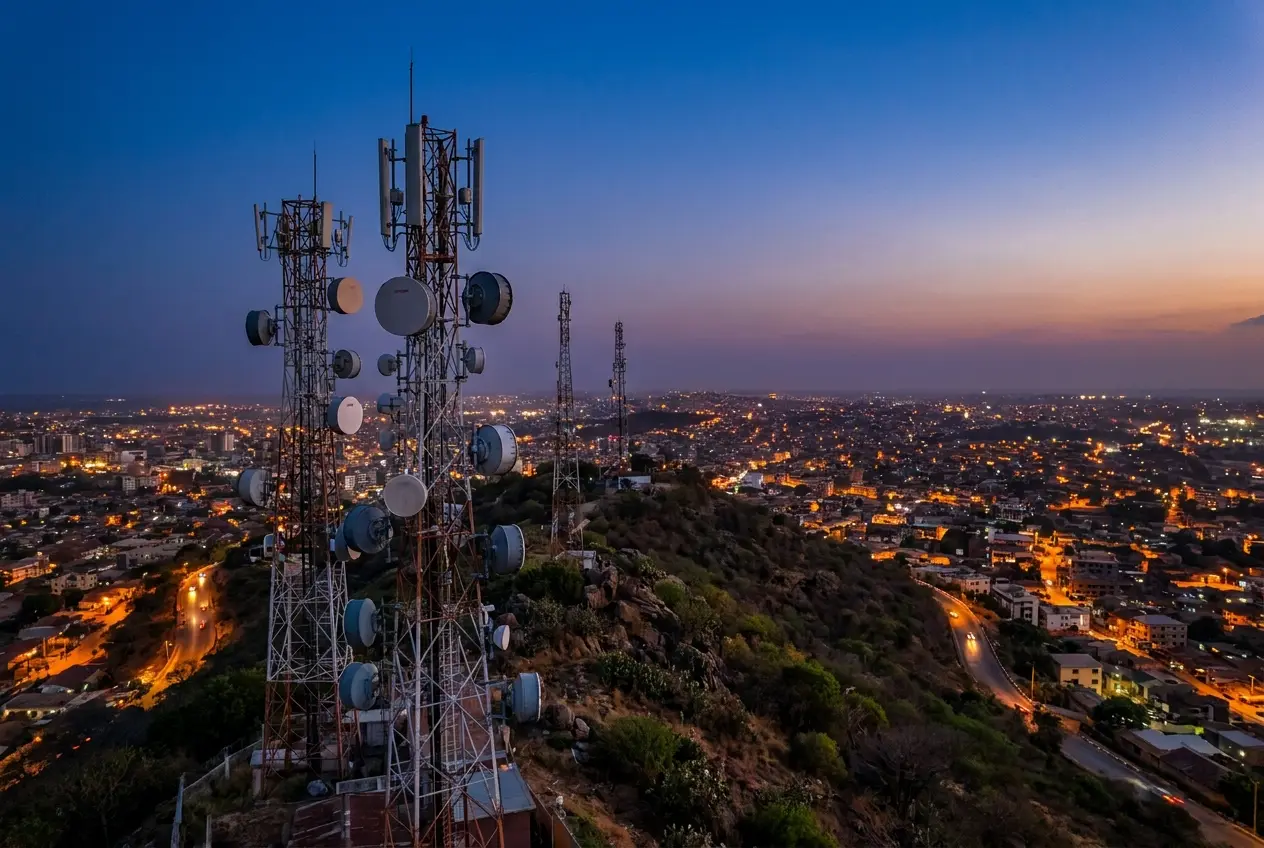
Telecommunications
Protect the Networks Every Other Sector Runs On.
Security for operators and digital platforms facing signaling abuse, SIM-swap fraud, DDoS and API abuse.
Executive Summary
- 01Telecom security spans signaling, retail identity processes, partner APIs and volumetric defense, and each domain needs its own controls.
- 02SIM-swap fraud succeeds through process weaknesses as often as technical ones, so security and fraud teams must share cases and data.
- 03Evidence from drills, tests and real incidents turns regulatory assurance into a record of how controls operate.
TELECOMS · Risk Drivers
Signaling and SIM‑swap fraud, DDoS, API abuse, subscriber data.
- Primary Attack Vectors
- SIM-swap and signaling abuse, DDoS, API abuse
- Operational Consequences
- Nationwide outages, fraud at scale, subscriber data loss
In Depth
Security in Telecommunications, Explained
Signaling Is a Trust Network
Mobile networks exchange routing, authentication and location messages over signaling protocols such as SS7 and Diameter. These protocols were designed for a closed community of carriers, so a message is often trusted because of where it appears to come from. Attackers who obtain interconnect access can query subscriber location, intercept one-time codes or disrupt service. Defense starts with a signaling firewall that filters by message type, origin and plausibility. It then adds correlation across home and visited network events, so a location query from a distant network moments after a local call becomes a visible anomaly rather than routine traffic.
How SIM‑Swap Fraud Succeeds
A SIM swap moves a victim's number to a SIM the fraudster controls. The attack usually abuses a human or process weakness: a retail agent, a call center script, a weak identity check or a compromised internal tool. Once the number is moved, the attacker receives SMS codes and resets banking and mobile money credentials. Controls therefore sit at several points. Strengthen identity proofing at the counter, restrict who can trigger a swap, add cooling periods and notifications, and expose swap-recency signals to banks and fintechs through protected APIs so they can step up authentication before releasing funds.
Resilience Under Volumetric Attack
Telecom services are attractive DDoS targets because outages are immediately visible to the public and the economy. Attacks hit the edge, the DNS layer, customer portals and signaling gateways, and they are often paired with intrusion attempts while teams are distracted. Protection combines upstream scrubbing capacity, traffic baselining, rate limits on exposed services and rehearsed runbooks. The network operations function matters as much as the security tooling, because capacity, routing and failover decisions are made there. Joint exercises between security and network teams decide how quickly traffic can be diverted without breaking legitimate subscribers.

A telecom network is only as trustworthy as its weakest handshake with another network, partner or retail counter.
Threat Scenarios
What It Looks Like in Practice
Subscriber Location Tracking
How It Shows Up
Location or subscriber-information queries arrive from foreign networks for numbers with no roaming activity.
Response
Signaling firewall rules block unauthorized message categories, and analysts trace the originating network and the affected subscribers.
Coordinated SIM‑Swap Ring
How It Shows Up
Swap requests cluster at one retail point or agent account, followed by sudden banking or mobile money logins.
Response
Analysts suspend the agent credentials, reverse suspect swaps and alert financial partners, then tighten the process that allowed the abuse.
Partner API Scraping
How It Shows Up
A reseller token queries subscriber profiles far above its normal volume or in sequential number patterns.
Response
Rate limits and object-level authorization checks stop enumeration, and the token is revoked and its access history reviewed.
DDoS Against Core Services
How It Shows Up
DNS resolution slows, portals time out and signaling gateways saturate, sometimes alongside an extortion demand.
Response
Traffic is diverted to scrubbing, nonessential exposure is throttled, and the event follows an established handling procedure such as NIST SP 800-61.
| Scenario | How It Shows Up | Response |
|---|---|---|
| Subscriber Location Tracking | Location or subscriber-information queries arrive from foreign networks for numbers with no roaming activity. | Signaling firewall rules block unauthorized message categories, and analysts trace the originating network and the affected subscribers. |
| Coordinated SIM‑Swap Ring | Swap requests cluster at one retail point or agent account, followed by sudden banking or mobile money logins. | Analysts suspend the agent credentials, reverse suspect swaps and alert financial partners, then tighten the process that allowed the abuse. |
| Partner API Scraping | A reseller token queries subscriber profiles far above its normal volume or in sequential number patterns. | Rate limits and object-level authorization checks stop enumeration, and the token is revoked and its access history reviewed. |
| DDoS Against Core Services | DNS resolution slows, portals time out and signaling gateways saturate, sometimes alongside an extortion demand. | Traffic is diverted to scrubbing, nonessential exposure is throttled, and the event follows an established handling procedure such as NIST SP 800-61. |
Regulatory & Operational Challenges
Telecom operators are designated critical infrastructure and must evidence assurance to regulators.
Subscriber data and fraud at scale make every weakness a national issue.
Relevant DAAKYI Capabilities
Services for Telecommunications
Delivery Approach
Priority Capabilities Across GUIDE, SECURE and OPERATE
GUIDE
Regulatory and CII assurance.
SECURE
Network and API security.
OPERATE
SOC and NOC with threat intelligence.
Methodology
The Method, Step by Step
- 1
Map the Estate
Inventory interconnect links, signaling nodes, core elements, provisioning systems, retail tools, partner APIs and subscriber data stores. Document who can reach what, from which networks, with which credentials. This map defines the attack surface and shows which assets support designated critical services, so effort follows consequence instead of habit.
- 2
Model Threats
Walk through realistic abuse cases for each domain: signaling misuse, swap fraud, API enumeration, insider access and volumetric attack. Map each to ATT&CK tactics where they apply, and rate likelihood and impact. The output is a ranked list of attack paths, with fraud loss and service impact stated in business terms.
- 3
Test and Harden
Assess configurations, firewall rules, API authorization logic, privileged access and segmentation between core, management and corporate zones. Test with controlled scenarios, including simulated swap requests and signaling probes. Fix findings in order of exploitability, and verify each fix rather than closing tickets on assumption.
- 4
Monitor and Correlate
Feed signaling logs, core events, API gateway telemetry, identity events and network flow data into one detection pipeline. Write use cases for known fraud patterns and adversary techniques. Tune continuously, because telecom traffic is noisy and a rule that floods analysts will soon be ignored.
- 5
Respond and Evidence
Run incident playbooks that join security, network operations, fraud and legal teams, and test them regularly. Preserve evidence, meet regulator and data protection reporting duties, and record lessons learned. Evidence from drills and real events then supports assurance submissions, so compliance reflects operating reality.
Deliverables and Roles
What You Receive, and Who Does What
| Deliverable | Purpose |
|---|---|
| Signaling Security Assessment | Shows which message types and interconnect paths are exposed and what filtering is required. |
| SIM‑Swap Control Review | Evaluates identity checks, agent privileges and notification flows against known fraud patterns. |
| API Security Test Report | Documents authorization, rate-limit and data-exposure weaknesses with reproducible evidence. |
| DDoS Readiness Plan | Defines thresholds, diversion steps and decision owners for volumetric attack. |
| Critical Infrastructure Assurance Pack | Compiles policies, control evidence and test results for regulator review. |
| Role | Responsibility |
|---|---|
| Chief Information Security Officer (Client) | Owns risk appetite and accountability for regulator-facing assurance. |
| Head of Fraud Management (Client) | Defines swap and subscription fraud rules and supplies loss data for detection tuning. |
| Network Operations Lead (Client or Provider) | Executes capacity, routing and failover decisions during attacks and outages. |
| Detection Engineer (Provider) | Builds and tunes use cases across signaling, API and identity telemetry. |
Maturity Model
Where Organizations Typically Stand
Stage 1
Reactive
Controls are bought after incidents, signaling is largely unfiltered and fraud is handled case by case at the call center.
Stage 2
Defined
Policies, an asset map and baseline firewalls exist, but security and network teams still work separately.
Stage 3
Managed
Telemetry is correlated, fraud and security share cases, and drills test DDoS and swap playbooks.
Stage 4
Assured
Controls are measured, evidence is continuous and regulators receive consistent, verifiable submissions.
Frameworks and Regulation
The Standards That Shape This Work
Ghana Cybersecurity Act, 2020 (Act 1038)
It provides for designation and protection of Critical Information Infrastructure, incident reporting and licensing of cybersecurity service providers, all directly relevant to operators.
Ghana Data Protection Act, 2012 (Act 843)
It requires data controllers to register and follow eight privacy principles, including data security safeguards, which apply to subscriber records.
NIST CSF 2.0
Its six functions, Govern through Recover, structure operator program planning and board reporting.
MITRE ATT&CK
Its 14 enterprise tactics help map intrusion behavior in corporate and cloud environments to detection use cases.
Buyer Guidance
Choosing the Right Provider
What to look for
- Look for working knowledge of SS7, Diameter and GTP, not only enterprise IT security.
- Require security and network operations to run with shared escalation paths.
- Expect API testing that checks object-level authorization, not just scanner output.
- Insist on evidence mapped to critical infrastructure and data protection duties in your jurisdiction.
Questions to ask a provider
- Which signaling attack categories can you detect, and from which data sources?
- How do you test swap controls without risking live subscribers?
- Who decides to divert traffic during a DDoS event, and how is that practiced?
- What evidence will we hold for a regulator after an incident?
Technical Detail
For Architects and Security Leads
Signaling Firewall Rule Layers
Effective signaling defense applies several layers. Category one rules block message types that should never arrive from external networks. Category two rules check that a message's claimed origin matches the subscriber's known home and roaming state. Category three rules apply velocity and sequence logic, such as repeated location queries across a number range. Diameter needs similar treatment at the edge agent, including validation of realm and origin host and restriction of procedures to roaming partners. GTP traffic on roaming interfaces should be limited to expected peers. Every blocked or allowed decision should be logged with enough context for an analyst to reconstruct who asked about which subscriber and why it was permitted.
Securing Partner and Subscriber APIs
Telecom APIs expose number verification, SIM-swap status, balances, provisioning and messaging to partners and apps. The common failure is broken object-level authorization: a valid token can read another subscriber's record by changing an identifier. Test every endpoint for it. Scope tokens narrowly per partner, enforce quotas and burst limits, and alert on sequential or dictionary-style number queries. Use mutual TLS or signed requests for high-value partners, and log which partner asked about which subscriber for later audit. Follow OWASP guidance and the ASVS to set test depth, and retire undocumented legacy endpoints that bypass the gateway.
Business Outcome
Resilient networks and trusted subscribers.
Glossary
Key Terms
- SS7
- A legacy signaling protocol suite that carries call setup, SMS routing and subscriber lookups between networks.
- Diameter
- A signaling protocol for authentication, authorization and charging in IP-based mobile core networks.
- SIM Swap
- The reassignment of a subscriber number to a different SIM, either legitimately or fraudulently.
- Interconnect
- The links through which an operator exchanges traffic and signaling with other carriers.
FAQ
Questions Sector Leaders Ask
DAAKYI Intelligence
Ask Kasara About Telecommunications
Kasara, our AI assistant, answers from DAAKYI's published content and can connect you with a specialist.

Next Step